Protected Resources
Whether you have a project site, are interested in a project site, or just want to be more informed, this page will tell you all about the types of resources in the County that have some kind of legal protection. Knowing this information can help you protect important County resources, and if you are an applicant, it can save you time and money to know about these resources before you apply.
- Air Quality. An overview of air pollution in the region, with links to the agencies which regulate pollutants.
- Cultural Resources. A brief overview of resources which could be of cultural or historic interest, and a list of phone numbers to call for additional information.
- Hydrology and Water Quality. An overview of water supply and ways to maintain and improve water quality.
- Oak Woodlands. A detailed description of oak woodland habitat values and their preservation and management.
- Riparian Habitat. A description of streamside habitat (called “riparian”) value and the policies which protect this habitat.
- Special Status Species. A description of the various “special status” designations that can be given to rare animals and plants (example: Endangered).
- Vernal Pools. A description of vernal pools and their habitat value.
Air Quality
The combination of surrounding mountains, abundant sunshine, thermal air inversions and wind patterns make the Sacramento Valley susceptible to high levels of air pollution.
In Sacramento, pollutants of greatest concern are ozone precursors [volatile organic compounds (VOCs) and oxides of nitrogen (NOx)], carbon monoxide (CO), particulate matter (PM), and other visibility reducing material. The largest single source of pollutants in the Sacramento area is automobile exhaust.
Air quality in Sacramento County is regulated by several agencies including:
- U.S. Environmental Protection Agency (EPA)
- California Air Resources Board (ARB)
- Sacramento Metropolitan Air Quality Management District (SMAQMD)
The EPA sets federal ambient air quality standards, while the ARB sets state ambient air quality standards, which limit air pollutants considered harmful to public health (primary standards) and welfare (secondary standards). The state ambient air quality standards are more stringent than the federal standards. Sacramento County is currently designated as a nonattainment area for both the state and federal ozone and particulate matter health standards. The SMAQMD has prepared an Air Quality Attainment Plan which describes the local measures planned to be implemented to achieve the federal and state air quality standards.
Ozone is formed by a chemical reaction between VOCs and NOx in the presence of sunlight. Once formed, ozone is widely dispersed, producing a regional air pollution problem rather than a localized one. Carbon monoxide is a directly emitted pollutant, generally localized near major thoroughfares and heavily congested urban streets. Particulate matter consists of discrete particles (liquid droplets or solids) in the air generated by motor vehicle fuel combustion, windblown dust, fireplaces and wood stoves, and agricultural burning. Adverse health effects associated with these air pollutants include: aggravated asthma, heart and lung disease; decreased lung function; acute respiratory symptoms such as severe chest pain, gasping, and aggravated coughing; chronic bronchitis; and premature death.
You can personally help reduce pollutant emissions and improve air quality in the Sacramento region if you:
- Carpool to work with a coworker.
- Share a ride with friends to social activities.
- Walk, ride a bike, or try public transit for some trips.
- Regularly tune-up your vehicle so the engine will run smoothly and pollute less.
- Use electric, rather than gas-powered, lawn and garden equipment.
- Purchase energy-efficient and reduced emission vehicles.
Cultural Resources
Cultural resources include historical and archaeological settings, sites, buildings, features, artifacts and/or areas of ethnic, historical, religious or socioeconomical importance.
Historical Resources
An historical resource (also a cultural resource) is a resource listed in, or determined to be eligible for listing in, the California Register of Historical Resources. A structure or that is fifty years old or older may be considered to be a potentially significant historical resource, according to the California Register of Historical Resources (California Code of Regulations, Title 14).
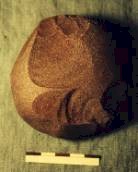
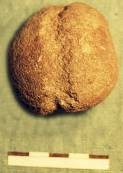
Artifacts
A usually simple object (as a tool or ornament) showing human workmanship or modification.

Contacts
County Coroner: (916) 874-9320
Native American Heritage Commission: (916) 653-4082
County Environmental Review Division: (916) 874-6141
Related Links
The National Park Service maintains the National Register of Historic Places. The web site also contains a technical assistance publication series and information on historic preservation standards.
The California State Parks, Office of Historic Preservation (OHP) maintains the California Register of Historical Resources. Also, the OHP reviews federal projects under Section 106 of the National Historic Preservation Act. The web site also contains California State Landmarks, the Statewide Historic Preservation Plan, and other publications.
Hydrology and Water Quality
Hydrology
Sacramento County contains a large network of waterways including drains, culverts, creeks, sloughs and rivers that collectively receive and covey stormwater and agricultural and urban runoff from throughout the County to the Sacramento/San Joaquin River Delta and to the San Francisco Bay. Because of the large number of water courses in Sacramento County and the County’s relatively flat terrain it is important to maintain an efficient drainage network in order to avoid negatively affecting existing drainage patterns, avoid increasing flood elevations in flood zone areas and creating new flood hazards.
The California Environmental Quality Act Guidelines (Guidelines) include instances when hydrological impacts might result from a project. Appendix G of the Guidelines details that impacts may occur when:
- an existing drainage pattern is substantially altered,
- the rate or amount of runoff increases in a manner that would result in flooding,
- a project is developed within the 100-year floodplain,
- structures are placed in a manner that would impede or redirect flows within a 100-year floodplain,
- people or structures are exposed to a substantial risk of loss, injury or death involving flooding; and
- when runoff is created or contributed to that would exceed the capacity of stormwater systems.
Floodplains and flood issues are regulated and addressed by the provisions of the Sacramento County Floodplain Management Ordinance, Improvement Standards, and Local Floodplain Management Plan as well as state and federal regulations. As part of the County’s planning and environmental review process for new development projects, an analysis of impacts related to hydrology and flooding may be required and measures to minimize those impacts may be necessary.
For additional information related to hydrology and flooding please refer to the following resources:
- Sacramento County Department of Water Resource’s website
- Floodplain Management Ordinance
- Improvement Standards
Water Quality
Before the Sacramento area was developed, most rainfall fell onto natural areas and the water soaked into the ground where waters were naturally filtered before entering watercourses or subsurface water supplies.
Now that the landscape in Sacramento has changed and become more developed, stormwater flows are able to more quickly run directly into street gutters and drains that carry run off, in many instances, directly to creeks. The fast moving urban runoff can pick up pesticides, fertilizers, sediment, oil and many other pollutants that are commonly found in urban settings and can result from construction related activities and can carry them to the creeks and rivers where they can negatively affect waters utilized for municipal water supplies, agriculture, recreation and wildlife habitat.
The California Environmental Quality Act Guidelines (Guidelines) include instances when water quality impacts might result from a project. Appendix G of the Guidelines details that impacts may occur when substantial sources of polluted runoff are created or when sources of pollution are created that substantially degrade ground or surface water quality.
Water quality issues are regulated and addressed by the provisions of the National Pollution Discharge Elimination System Municipal Stormwater Permit issued to Sacramento County by the Central Valley Regional Water Quality Control Board, the County’s Stormwater Pollution and Erosion Control Ordinance, the County’s Stormwater Management and Discharge Control Ordinance, the County’s Land Grading and Erosion Control Ordinance as well as state and federal regulations. As part of the County’s planning and environmental review process for new development projects, an analysis of impacts related to water quality may be required and measures to minimize those impacts may be necessary.
For additional information related to water quality please refer to the following resources:
Oak Woodlands
Healthy oak woodland ecosystems, which can support both human communities and native wildlife, are part of the County's legacy, and each generation has an obligation to be a good steward so that this legacy may be preserved for future generations to enjoy.
The Resource
Ecologically functional woodlands are those that allow for the normal life cycle activities of wildlife including cover, denning, nesting, foraging , migration corridors and other functions necessary to complete a life cycle. Essential habitat elements must be in sufficient quantities and arrangement to support the diverse assemblage of wildlife species that are normally found on or use oak woodlands. The oak woodlands habitat has a rich abundance of wildlife species in California with over 330 species of birds, mammals, reptiles and amphibians depending on them at some time in their life cycle. These woodlands are able to sustain such abundant wildlife primarily because they produce acorns, a high quality and abundant food supply, and because they provide important shelter and nesting habitat.
In addition to its wildlife habitat value, the oak woodland ecosystem plays an important role in soil development, watershed protection and sustaining air and water quality. The resource is also appreciated for its natural woodland beauty, and its availability as a recreational and spiritual retreat, as well as for its historic and cultural values. Many consider the oak woodland with its interspersed grassland and stream courses to be the classic California landscape, a perception that contributes to higher land values and improves the quality of our lives. Oak woodlands support enterprises such as livestock grazing, firewood harvesting and residential land use. Today recreational uses, i.e..,hiking, picnicking, camping, wildlife observation and photography further enhance the quality of living in Sacramento County and add to the economic benefits of managing the oak woodland resource.
Woodland Preservation and Management
In spite of the many environmental and human benefits of oak woodlands, there is growing concern statewide for the health of this limited resource and the wildlife it supports. Earlier decades of rangeland clearing and development have compromised hundreds of acres within Sacramento County. Rangeland clearing has become relatively insignificant in recent decades but urban and suburban development continues to compromise and fragment habitat and is the primary cause today for oak tree and woodland loss in Sacramento County. Current development proposals too often provide inadequate room for both improvements and tree/woodland preservation. The concept of 'cluster development,' which would concentrate development into smaller areas and thereby preserve greater areas of woodland, is not promoted or required. Building codes are not written with oak tree preservation in mind and often are too inflexible to accomplish tree preservation. Significant tree encroachment, particularly grading impacts, are often not identified early in the planning process when the preservation effort is most effective. Other changes accompanying development such as indiscriminate recreational use and the introduction of exotic (nonnative) species of plants and animals, often affect wildlife and the woodland resource well beyond the boundaries of development.
It is difficult to preserve the resource if its value is not clearly defined and quantified. We more readily define a single Heritage Oak Tree by assigning a cultural-historical value; by assessing its health, age and size, and even by applying formulas that can determine its monetary value. However, the complexity of the oak woodland resource with its multiple age stands and diverse environmental and human benefits is not so easily quantified or valued. The developer capitalizes on the resource to enhance the value of his product; the homeowner values the shade in his backyard; the off-highway vehicle user seeks the challenge of the woodland trail; still others seek the solitude and spiritual renovation found in the woodland experience; we benefit collectively from the contribution to cleaner air and water; and of course, the wildlife this resource supports depends on it for its very existence. The values of this resource are many and complex and often are in conflict. The conflict arises because of the many competing uses and because the resource is limited. As we come to recognize this diversity of benefits and the increasing user pressure, and to understand its limited and irreplaceable nature, we will begin to understand its true value. With inadequate planning that allows incremental fragmentation and encroachment, and management that ignores restoration and permits overuse, the resource is compromised or lost; and once lost is essentially irreplaceable for generations. Mitigation for loss of mature oak trees with a few saplings falls far short of replacement. These saplings cannot begin to replace the decades of growth or the intangible cultural and historical values; indeed, they don't even replace the tree physically for several generations. Our best efforts at restoration even over decades of time cannot replace the complex and intricate ecological balance of plant and animal life that required hundreds of years to evolve into the oak woodland plant community. If we are to be successful in this effort, it is essential to recognize that much of the true value of the oak woodland resource in human terms is historical, cultural, spiritual and intangible in nature and cannot be quantified in monetary terms. We must also recognize that avoiding the removal of one or a few oak trees at a time within an approved subdivision or other discretionary project does not equate to oak woodland preservation. Once the trees become part of the subdivision their human value is arguably enhanced by increasing the economic value of a particular lot and perhaps by becoming a source of enjoyment to the ultimate lot owner, but the trees cease to be a fully functional part of the oak woodland ecosystem. The only way we can preserve an ecologically functioning woodland and sustain its values for future generations is to preserve it essentially intact.
Recent research conducted in California regarding the preservation of oak woodland bird habitat has planning implications for the conservation of this limited resource. Although additional follow-up research is needed several complementary strategies are proposed.
- Preserving the remaining large, undeveloped parcels of oak woodland (>40 acres) should help ensure the persistence of sensitive species
- New development within the rural residential landscape should be concentrated into relatively small areas, and subdivision of rural residential parcels into small ranchettes (1-5 acres) should be limited.
- Oak woodland on small parcels should be managed to retain a variety of habitat types, including large trees, snags and interior live oaks.
- Maintaining a mosaic of habitat types is important to preserving a variety of species.
Oak woodlands of Sacramento County can be preserved now and for future generations with careful and creative planning and with informed land use decision making that minimizes fragmentation and emphasizes preservation and restoration. Community-wide recognition of the many diverse natural and human benefits of the resource and recognition of its limited availability is essential to its preservation. Planning efforts must include oak woodland renewal as well as preservation, soil erosion control, ground water recharge, heritage tree preservation, fuel modification and fire management, natural watershed and drainage management, watercourse preservation, view corridor identification and preservation, habitat preservation, judicious use of conservation easements, and promotion of public, professional and decision-maker awareness.
Pursuant to the requirements of the California Environmental Quality Act and the intent of the "Conservation Element" of the Sacramento County General Plan, it is the responsibility of the Sacramento County Department of Environmental Review and Assessment to promote the preservation, protection and restoration of the oak woodland resource in Sacramento County. Within the framework of the planning and environmental review process, the Department informs the Sacramento Community of the many values of the oak woodland resource; identifies potentially harmful impacts which are likely to result from construction associated with discretionary projects, and provides recommendations for specific mitigation, management, preservation and planning programs.
Related Links
Riparian Habitat
Riparian refers to the transition area between a body of water (pond, lake, creek, or river) and the uplands. This area is commonly referred to as the bank. Often the plants and animals associated with the riparian area are heavily influenced by the body of water because of water availability or disturbance due to flooding. Here in Sacramento, riparian areas often consist of trees such as oaks, willows and cottonwoods and shrubs such as wild rose, elderberry, poison oak, and blackberries. Riparian habitat can range from an open grassy bank to a closed canopy of large mature trees.
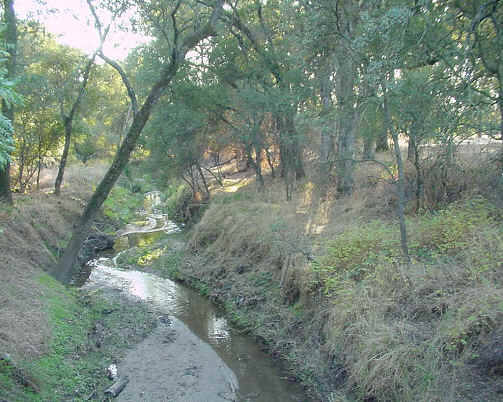
Arcade Creek in Citrus Heights photo by PER staff
When compared to grasslands and upland forest, riparian areas have the highest species diversity and productivity for both flora and fauna. Over 135 species of California birds such as the willow flycatcher, yellow-billed cuckoo and red-shouldered hawk either completely depend upon riparian habitats or use them preferentially at some stage of their life. Riparian habitat provides food, nesting habitat, cover, and migration corridors. Another 90 species of mammals, reptiles, invertebrates and amphibians such as California red-legged frog, valley elderberry longhorn beetle, riparian brush rabbit, steelhead, Chinook salmon, western pond turtle, Sacramento splittail, giant garter snake, and Swainson's hawk depend on California's riparian habitats.
Riparian habitat provides riverbank protection, erosion control and improved water quality. In addition, riparian areas provide numerous recreational and aesthetic values. Locally the American River corridor provides biking, horseback riding, bird watching, fishing, and boating.
Historic records indicate that the Central Valley supported wide swaths of riparian oak woodland following stream and river channels. A mix of interior live oaks, blue oaks, and valley oaks, as well as other native tree and shrub species, spread outward from the riverbanks for miles. Riparian forests have largely been lost to stream channelization, development, logging, grazing and water diversion throughout the west. Only 5% to 10% of California's original (pre-European contact) riparian habitat exists today and much of the remaining habitat is in a degraded condition. In the Sacramento River Valley, only 25,000 of the estimated 500,000 acres of riparian habitat that existed in 1850 remain today.
Sacramento County is fortunate to have a few locations of prime riparian forests protected in preserves and recreation areas. Some of these locations include the American River Parkway, the Dry Creek Parkway, the Cosumnes River Preserve, and the Beach/Stone Lakes National Wildlife Refuge. Additional preservation and restoration is being performed on the Sacramento Regional County Sanitation Districts Buffer Lands area.
Sacramento County has adopted numerous policies in favor of protecting riparian areas. These policies can be found in the 1993 Sacramento County General Plan Conservation Element. County policy CO-62 ensures no net loss of marsh and riparian woodland acreage, values or functions. County policy CO-67 states that parcels shall not be created wherein much of the parcel area would comprise marsh or riparian habitat rendering the parcel unbuildable except when within a floodplain corridor or to be dedicated to and maintained by the County for flood control, drainage, and wetland maintenance.
The state and federal government require agreements and permits when work activity occurs in or over creeks and rivers. The California Department of Fish and Wildlife requires a Section 1600 Lake and Streambed Alteration Agreement (also known as LSA Agreement) to be obtained when working in or around any stream, river or lake. In accordance with Section 404 of the Clean Water Act the U.S. Army Corps of Engineers requires a permit for any filling, dredging, excavation or other modification to waters of the U.S. Both the state and federal government may require biological survey prior to construction, the implementation of measures to avoid impact, and habitat restoration following construction.
Related Links
Government:
- California Department of Fish and Wildlife 1600 agreements
- U.S. Army Corp of Engineers Regulatory permits
Non-Profits Working to Protect Riparian Habitat
Special Status Species
"Special Status Species" is a universal term used in the scientific community for species that are considered sufficiently rare that they require special consideration and/or protection and should be, or have been, listed as rare, threatened or endangered by the Federal and/or State governments.
The Federal and State Endangered Species Acts frequently use the following terms when referring to special status species:
- Rare (State) - this is technically used only for plants, as defined under the California Native Plant Protection Act. When the California Endangered Species Act (CESA) was enacted, all animals with a rare classification were reclassified as threatened; however, rare plants were not.
- Species of Concern (Federal) - species for which existing information indicates it may warrant listing as threatened or endangered but for which substantial information for listing is still lacking.
- Species of Special Concern (State) - special plant/animal species tracked by California Natural Diversity Data Base regardless of their legal or protection status.
- Species - any subspecies of fish, wildlife, insect, or plants, and any distinct population segment of any species, which interbreeds when mature.
- Endangered (Federal & State) - any species that is in danger of extinction throughout all or a significant portion of its range. (Except insect pests - Feds).
- Threatened (Federal & State) - any species likely to become an endangered species within the foreseeable future throughout all or a significant portion of its range.

Swainson's Hawk. Buteo swainson
Listed as "Threatened" by the State government and provided protection under the California Endangered Species Act (CESA).
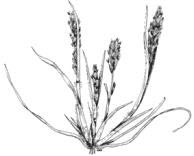
Sacramento Orcutt Grass. Orcuttia viscida
Listed as "Endangered" by both State & Federal governments (CDFW graphic).
Protected Resources
A Local Treasure
Blooming native flowers burst in concentric rings as water recedes in the vernal pools that define spring in the Sacramento Valley. The presence of vernal pools adds to the quality of life we enjoy in Sacramento County.
The Department of Environmental Review and Assessment (DERA) analyzes impacts that projects within Sacramento County may have on vernal pools. Preservation of vernal pools is part of what DERA accomplishes by ensuring that projects within Sacramento County are in compliance with the California Environmental Quality Act (CEQA).
What are Vernal Pools?
Vernal pools are seasonally inundated depressions with an impermeable soil layer, which allows water to be retained for extended periods of time. The impermeable layer is formed from clay soils derived from the weathering ancient volcanic mudflows of the Sacramento Valley. The dense clay soils retain rainwater in shallow depressions during the winter and early spring. Water may fill and evaporate from vernal pools several times throughout the season. As spring progresses, water evaporates from vernal pools and is consumed by emerging plants. Specialized plants and animals are adapted to survive these drastic cycles of wetting and drying.
Habitat for Special Plants and Animals
Unique communities of specialized plants and animals, including some special status species, inhabit vernal pools. After months of dry weather, invertebrates, crustaceans, and amphibians emerge as rainwater fills the pools the winter. Plants sprout underwater with specialized adaptations such as floating leaves and hollow stems that act like straws to bring air to the roots. Spring flowers burst with color, attracting native bees. The water, plants and animals attract birds that come to feed and rest in the pools.
As the season changes from spring to summer, insects and crustaceans will produce reproductive cysts and eggs as water evaporates from the vernal pools. Amphibians will bury themselves deep in the protective mud and lie dormant along with seeds, cysts and eggs till the next rainy season. By the end of summer, pools are completely dry, and the plants and animals are protected deep within the soils until the next rain begins a new cycle.